

Some journeys begin long before you board a plane. This one began nearly half a century ago.
As a child, I lived in Côte d’Ivoire with my parents for three years. We lived in Cocody, one of Abidjan’s neighborhoods, and I went to school there.
Returning to Côte d’Ivoire several decades later therefore had a special significance. I wasn’t just visiting a tourist destination—I was returning to a country that had shaped part of my memories.
In the meantime, Abidjan has, of course, changed, as has Côte d’Ivoire. High-rises have sprung up, roads have been transformed, and new neighborhoods have been built. But some things remain surprisingly familiar.
There are the colors, the smells, the flavors, the accents, the vegetation, the humid heat, the markets, the street-side cafes, and that very Ivorian way of occupying space and bringing the streets to life.
Perhaps the most unsettling thing is realizing that memory sometimes works better than archives. A scent can bring back a memory from forty years ago. An accent can make it feel as though you left a place just yesterday.
And then there’s the music.
I’m always moved when Alpha Blondy’s “Cocody Rock” plays. A leading figure in Ivorian and African reggae, Alpha Blondy is closely associated with Abidjan. The few words “Cocody Rock, Cocody Rasta” obviously take on a special resonance when you’ve lived in that neighborhood yourself.
So it is with this dual perspective that I explore Côte d’Ivoire: that of the traveler discovering a contemporary country and that of the child retracing the steps of his past.
Abidjan: A Return to My Roots
We arrive in Abidjan at the end of the day. After clearing immigration at the airport, we head toward Cocody and the Vallon neighborhood, toward Rue des Jardins.
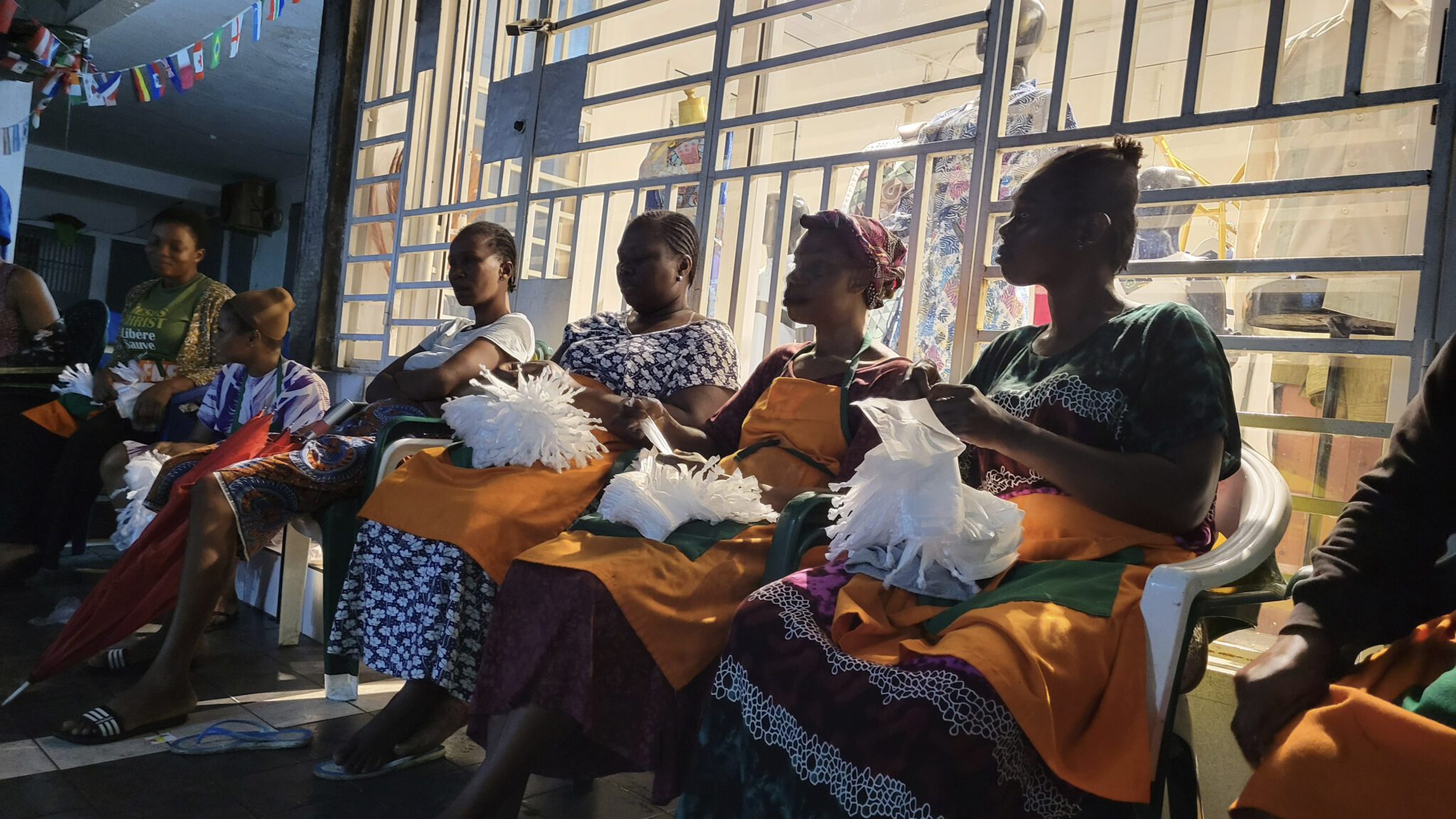
First evening in Cocody, at a maquis
The famous “agoras”—those well-lit sports fields where young people and neighborhood residents gather—immediately highlight the importance of soccer and sports in everyday life in Côte d’Ivoire.
But for this first evening, we’re heading to the Maquis Hélène, which we’re told is very well-known.
The maquis is a true institution in Côte d’Ivoire. In France, we have our cafés and bistros; in Côte d’Ivoire, there are the maquis. And the parallel goes beyond that of a simple restaurant. People come here to eat, drink, chat, listen to music, watch soccer, meet up with friends, or simply spend time together. The maquis is as much a social gathering place as it is a restaurant.
Braised fish, grilled beef tenderloin, plantains, attiéké… The first few bites are almost unsettling. Taste has this extraordinary ability to transcend time.
Certain flavors we thought were forgotten resurface immediately. They don’t just tell the story of a country—they also tell the story of a time in our own lives.
And already, around the tables, the conversations, the gestures, the artificial lights, and the colors of the signs come together to create a scene that heralds the journey ahead.
Côte d’Ivoire is slowly beginning to tell its story again. I can feel it!

Le Plateau, the economic heart of a transformed Abidjan
The next day, we headed to the Plateau, Abidjan’s business district and administrative heart.
For anyone who knew the city as a child, the change is spectacular.
Abidjan is now a metropolis of several million people, centered around the Ébrié Lagoon. The city has expanded across several districts, each with its own distinct identity: Cocody, Plateau, Treichville, Marcory, Yopougon, Abobo…
The Plateau district is home to a large portion of the city’s administrative and economic functions. Modern skyscrapers now tower over the lagoon, giving Abidjan the skyline of a major African metropolis.
From the plaza in front of Saint-Paul Cathedral in Abidjan, the view is almost entirely urban. At times, one might think they were in a major European metropolis, as certain areas are dominated by concrete, glass, and modern infrastructure. This image is quite different from the often-romanticized notion of an Africa consisting solely of lush vegetation.
The city seems to be in perpetual motion. Small red taxis, public transportation, private cars, motorcycles, and ride-hailing vehicles crisscross in traffic that never seems to stop.
What is most striking is the coexistence of this modernity—with its international brands—and a much older city, made up of markets, small shops, popular restaurants, and neighborhoods where daily life still largely takes place on the streets.
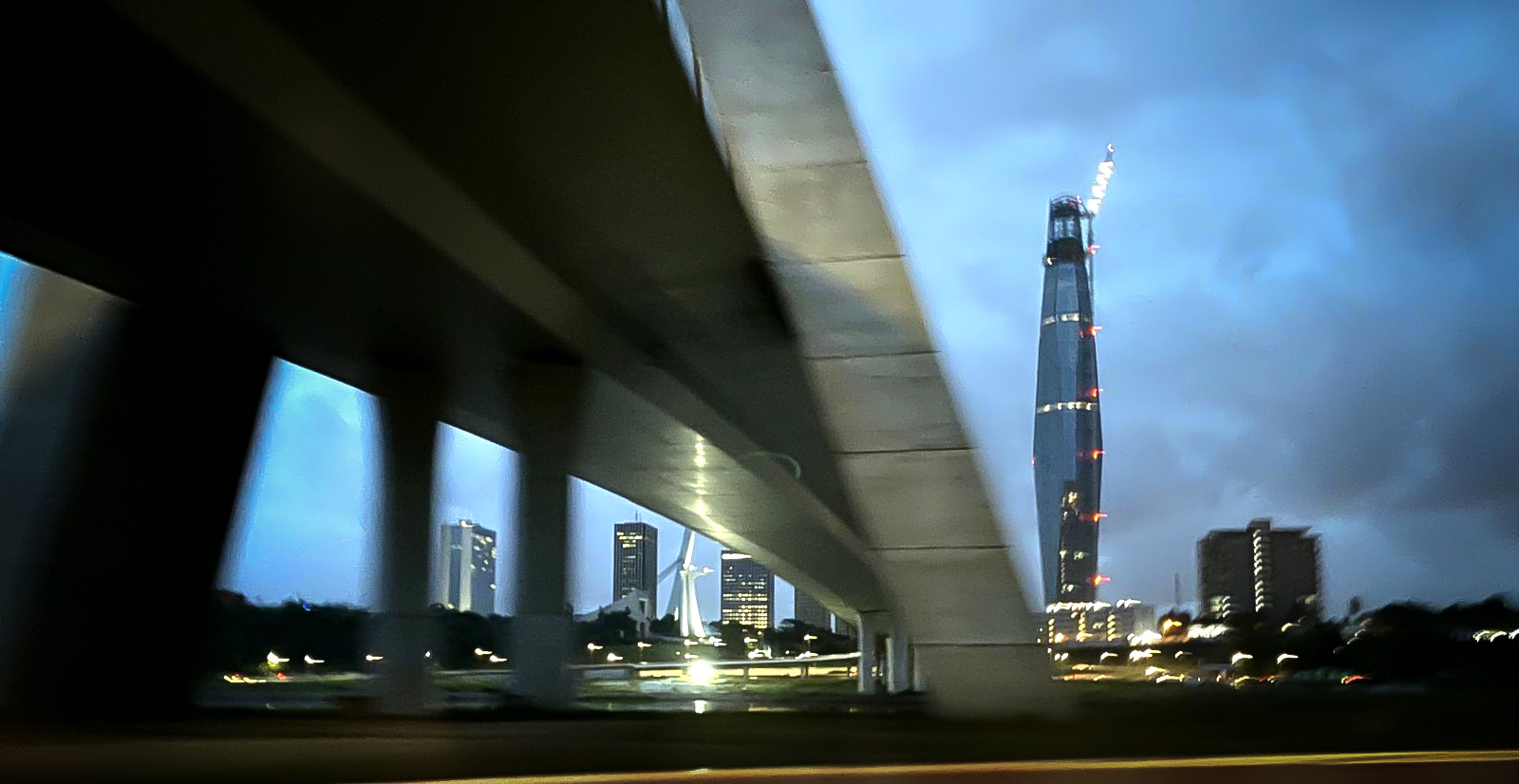
The Alassane Ouattara Bridge, Abidjan’s New Landmark
The Alassane Ouattara Bridge, inaugurated in 2023, connects Cocody to the Plateau by spanning Cocody Bay. This cable-stayed bridge, rising to over 100 meters, has become one of the new symbols of Abidjan’s urban transformation. It is part of the extensive development project for Cocody Bay.
In particular, it is intended to help improve mobility between the two municipalities.
That’s because traffic jams here are just as bad as those in Jakarta, for example.
But beyond its role as a transportation link, the bridge also contributes to Abidjan’s new image.
From the lagoon, the outlines of the buildings in the Plateau—its “skyline”—and the vegetation of Cocody come together to form an almost symbolic representation of contemporary Côte d’Ivoire: a city embracing modernity while remaining deeply African. For someone returning to the city, the contrast is striking.

Grand Bassam: Colonial History, Heritage, and the Ocean
The historic city of Grand Bassam has been a UNESCO World Heritage Site since 2012.
Located about an hour and a half from Abidjan, Grand Bassam is a must-see stop on any trip to Côte d’Ivoire.
The city was the first capital of the French colony of Côte d’Ivoire, from 1893 to 1900. Its location on the coast, between the lagoon and the Atlantic Ocean, made it a strategic hub for trade and the administration of the colony.
Its history, however, is far more complex than a simple succession of colonial buildings.
The city’s layout already reflects the separation between different neighborhoods designated for commerce, administration, European housing, and indigenous housing. The Quartier France, built on the coastal strip between the Ouladine Lagoon and the Atlantic Ocean, retains much of this historical layout. Nearby stands the village of N’zima, which attests to the enduring presence of local cultures.
Grand Bassam thus tells the story of the contacts, exchanges, and power dynamics between Europeans and Africans during the colonial period. The city also bears witness to the movement that would lead to Côte d’Ivoire’s independence.
Traces of Time in Grand Bassam
In the Quartier France, the old facades seem to have been designed to tell the story of the passing of time.
Shutters, verandas, galleries, balconies, weathered walls, and tropical vegetation come together to create a particularly evocative setting.
But what interests me here is not just the architecture. It’s the traces.
The marks of moisture on the walls. The peeling paint. The plants reclaiming the buildings. The shadows beneath the verandas. The details that tell decades of history without the need for a single explanatory sign.
Ultimately, I photograph not so much the monuments themselves as the effects of time on them.
At least when the weather allows for taking photos. For now, it’s mostly the rainy season.

Grand Bassam Facing the Atlantic Ocean
It takes just a few minutes to go from this architecture steeped in history to the vastness of the Atlantic Ocean.
The sandy beach stretches endlessly. The tropical sky fills with clouds. Silhouettes appear and disappear in this shifting light.
Grand Bassam thus possesses two contrasting facets: that of memory and that of the horizon.
On one side, the buildings tell the complex story of the colonial period and the early days of modern Côte d’Ivoire.
On the other, the ocean serves as a reminder that this city was also a port opening onto the Gulf of Guinea.
Today, Grand Bassam’s beach is also a popular relaxation spot for Abidjan residents, especially on weekends.
The Costume Museum and Ivorian Cultural Diversity
The Costume Museum in Grand Bassam allows visitors to continue this exploration by delving into the world of clothing, adornments, and traditions of Côte d’Ivoire’s various communities.
Of course, traditional dress is not merely a matter of appearance.
In many African societies, clothing, fabrics, colors, jewelry, and masks can serve social, symbolic, or ritual functions.
The visit also offers a deeper understanding of the country’s diverse religious and spiritual traditions, where Christianity, Islam, and ancestral traditions coexist.
The term “animism,” often used in a very general sense, should be employed with caution. Ivorian traditional belief systems are diverse and complex. In particular, they place great importance on ancestors, the forces of nature, spirits, and the relationships between the visible and invisible worlds.
This spiritual dimension will reemerge strongly as we travel to Senufo country.
From Cocoa to Chocolate: Understanding a Key Industry in Côte d’Ivoire
It’s impossible to travel in Côte d’Ivoire without taking an interest in cocoa.
The country is now the world’s leading cocoa producer and has also become a major player in cocoa processing. In December 2025, the FAO reported that Côte d’Ivoire was the world’s leading producer and processor of cocoa and that it aimed to process 80% of its beans locally by 2030.
Yet cocoa isn’t native to Côte d’Ivoire! The cacao tree is a plant native to tropical America. It was introduced to Côte d’Ivoire in the 19th century. When I learned this, I was completely taken aback.
Behind every chocolate bar lies a much more complex economic, agricultural, and environmental story.
Cocoa begins on plantations, often on family-run farms. The pods are harvested by hand, opened, and then the beans are fermented and dried before entering the processing and export chains.
Understanding this supply chain helps illustrate the gap that sometimes separates European consumers from producers.
Today, Côte d’Ivoire is seeking to further develop local processing and make the sector more sustainable. Cocoa is, in fact, closely linked to the issue of deforestation. The expansion of plantations has contributed to a sharp reduction in Côte d’Ivoire’s forest cover, while agroforestry programs now seek to combine cocoa trees with other trees in order to produce crops while restoring ecosystems.
From Plantation to Tasting
Exploring the supply chain allows visitors to follow the various stages: planting, harvesting, processing, production, and finally tasting. It’s also another way to discover the country.
Encounters with local initiatives, such as that of the Abel community, also demonstrate how agriculture, processing, vocational training, and social reintegration can be combined within a single project.
Vinqueur: From West African Fruits to Spirits
Another unexpected discovery: the Vinqueur distillery.
Originally from Ivory Coast and the United States, this couple settled in Côte d’Ivoire to develop an original idea: transforming local West African fruits and spices into spirits, liqueurs, fruit wines, and syrups.
Vinqueur’s story began notably with bissap and passion fruit, before expanding to a whole range of beverages inspired by the Ivorian terroir. The first spirit developed by the company is Abidjan Gin, made from 21 plants and spices.
We visit the charming little artisanal distillery.
The country’s agricultural richness is also reflected in the multitude of fruits, grains, spices, and plants that, in the hands of artisans and entrepreneurs, can be transformed into products with a strong local identity.

Korhogo: An Immersion in Senufo Country
To reach Korhogo, the capital of northern Ivory Coast, flying is the quickest way to cover the hundreds of kilometers separating Abidjan from the north of the country.
The change in scenery is immediate.
The lush vegetation of the south gradually gives way to savanna landscapes. The earth turns yellow, sometimes ochre or reddish. The tall trees are more widely spaced, and the horizon appears much more open.
The north has its own rhythms, its own landscapes, and a particularly strong cultural identity.
Around Korhogo, the economy relies heavily on agriculture. Cotton, mangoes, corn, millet, and other grains shape rural life.
But Korhogo is above all a gateway to the Senufo world.

In the north, Senufo culture: a blend of traditions and cultural transmission
The Senufo constitute one of the major cultural groups in northern Côte d’Ivoire, as well as in neighboring regions of Mali and Burkina Faso.
What quickly stands out is the importance of cultural transmission.
In the villages, a visit traditionally begins with greetings to the chief and the elders. You introduce yourself, explain where you’re from, and why you’re there. The visitor then becomes a guest. This protocol is not merely a formality. It serves as a reminder that in many traditional societies, the community and the elders occupy a central place in the social order.
In my view, this is precisely the kind of thing that certain African societies can teach our own societies here in the West.
Niofoin and the Tchapalo
In Niofoin, this tradition of hospitality takes on its full meaning.
The village, tucked away at the end of a wide dirt road, preserves traditional architecture and layout that offer insight into daily life in Senufo country. The mud-brick structures, huts, and spatial organization reflect an architectural style adapted to the climate and locally available materials.
And then there’s the tchapalo. This traditional fermented drink made from millet or sorghum has long been a part of the social life of many communities in the region. Drinking tchapalo is almost a mandatory rite of passage upon our arrival. For my stomach, however, I’ll be drinking it in moderation.
The Poro, a Fundamental Initiatory Institution
Senufo society remains deeply shaped by the Poro, a traditional initiatory, educational, and social system. It is, in fact, the name of the region.
It should not be reduced to a mere ceremony.
The Poro plays a role in the transmission of knowledge, values, and social norms. It also serves as a rite of passage between different stages of life.
This structure explains, in particular, the significance of certain sacred groves.
Above all, it reminds us of a fundamental rule when traveling in a region where traditions remain alive: not everything is open to visitors, and not everything should be photographed.
Certain spaces are reserved for initiates. Certain rites are not meant to be shown.
Respecting these boundaries is an integral part of the experience.

The balafon: music born of wood and calabashes
On the roads of the north, the craft of balafon-making also offers insight into the close relationship between craftsmanship and music.
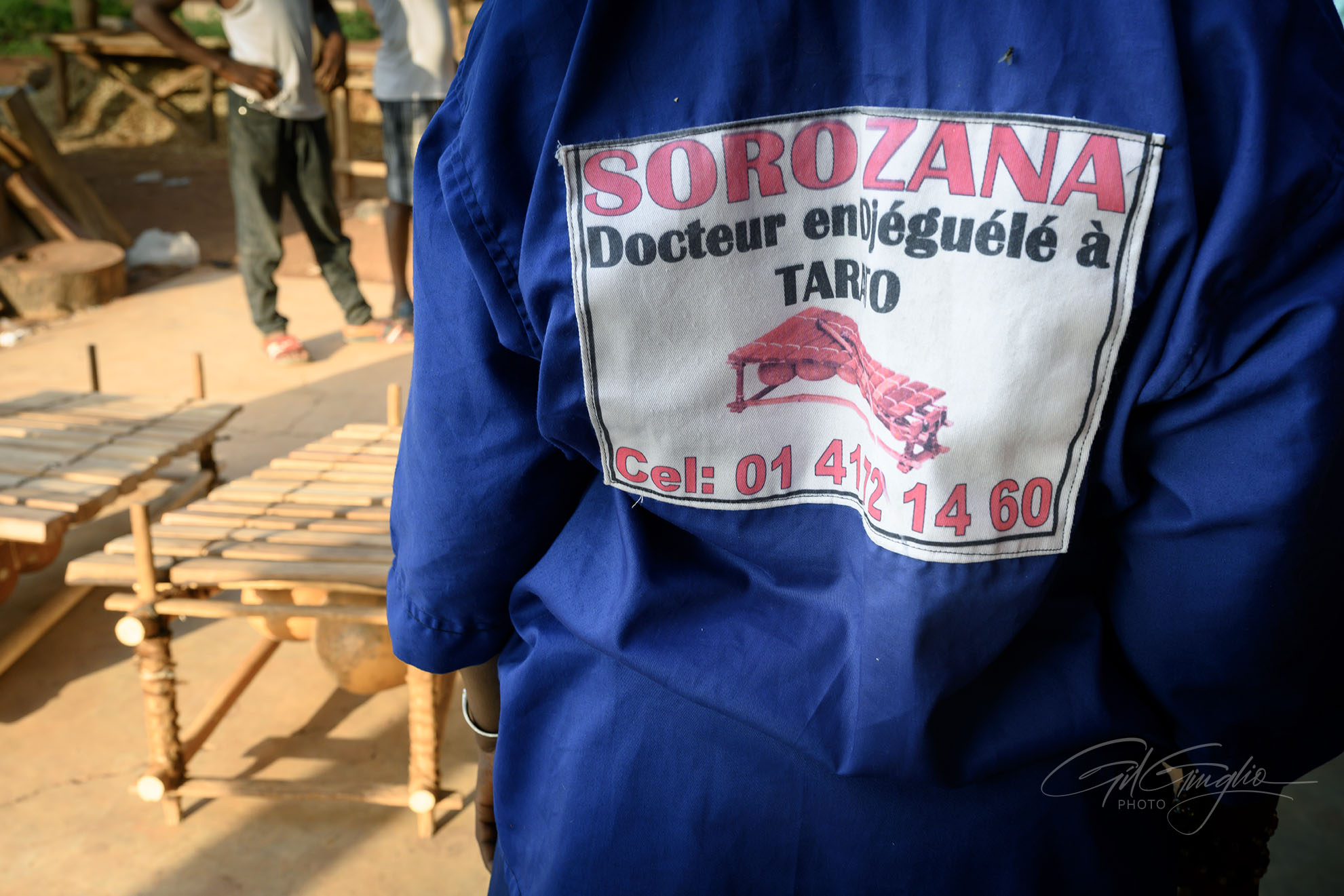
Still in the Niofoin area, south of Korhogo, a sign by the roadside announces a workshop: “Balafon Doctor.”
It’s hard not to stop at this workshop, where several men from the village appear to be working.
The balafon consists of tuned wooden bars arranged above calabashes, which serve as soundboxes.
Making a balafon is obviously not just a matter of cutting a few pieces of wood.
Each key must produce a specific note. The work therefore relies on genuine acoustic knowledge, passed down through experience.
Here again, the artisan is also a musician. In Côte d’Ivoire, I’ve noticed that craftsmanship is never truly separated from its practical use.

Waraniéné: The Art of Senoufo Weaving
In Waraniéné, also in the Korhogo metropolitan area, cotton becomes a medium for art.
The looms are impressive for their size and, above all, for the speed of the weavers’ movements.
Long strips of cotton are produced and then assembled to form loincloths, clothing, or decorative pieces.
But perhaps the most fascinating aspect lies in the hands—the hands that pull the thread, the hands that strike the loom, the hands that adjust the patterns with a precision honed by years of practice. One could watch these movements for hours.
Here, the fabric becomes much more than an object: it is also the result of a craft passed down from generation to generation.

Fakaha, Painted Cloths, and the Senufo Imagination
A few hours’ drive from Korhogo, the small village of Fakaha awaits us. The almost desert-like landscape changes once again.
Here, it is the famous Fakaha canvases—also known as Korhogo canvases—that catch the eye. They are created on unbleached cotton canvas and painted with natural pigments. The designs feature animals, figures, geometric shapes, and symbols drawn from Senufo culture.
We watch a demonstration before picking up the thin spatulas—which serve as paintbrushes—ourselves.
The pigments and motifs immediately remind me of something.

It’s impossible not to think of certain works by Picasso, particularly the graphic style of the famous painting *Guernica*.
So, naturally, the imagination runs wild. A local legend has it that Pablo Picasso discovered the art of Fakaha and was influenced by these paintings. Some accounts even claim the painter visited the village in 1968. However, there is currently no solid historical evidence to confirm that Picasso actually came to Fakaha.
One thing is certain: Senufo art possesses a visual power that is hard to ignore.
And this discovery reminds us just how long artistic influences have been circulating between Africa, Europe, and the rest of the world.

Kapélé: Clay, Kaolin, and Earth Tones
In Kapélé, artisans work primarily with clay to create beads and decorative objects.
The materials seem simple: earth, pigments, kaolin, and sometimes indigo.
But in the hands—and even the feet—of the artisans, they take on shapes, colors, and form.
The technique used to spin certain beads between the toes is particularly surprising. The movement seems improbable, but it proves to be astonishingly precise.
This economy of means produces a particularly striking aesthetic.

The Boloye, the spectacular dance of the panther men
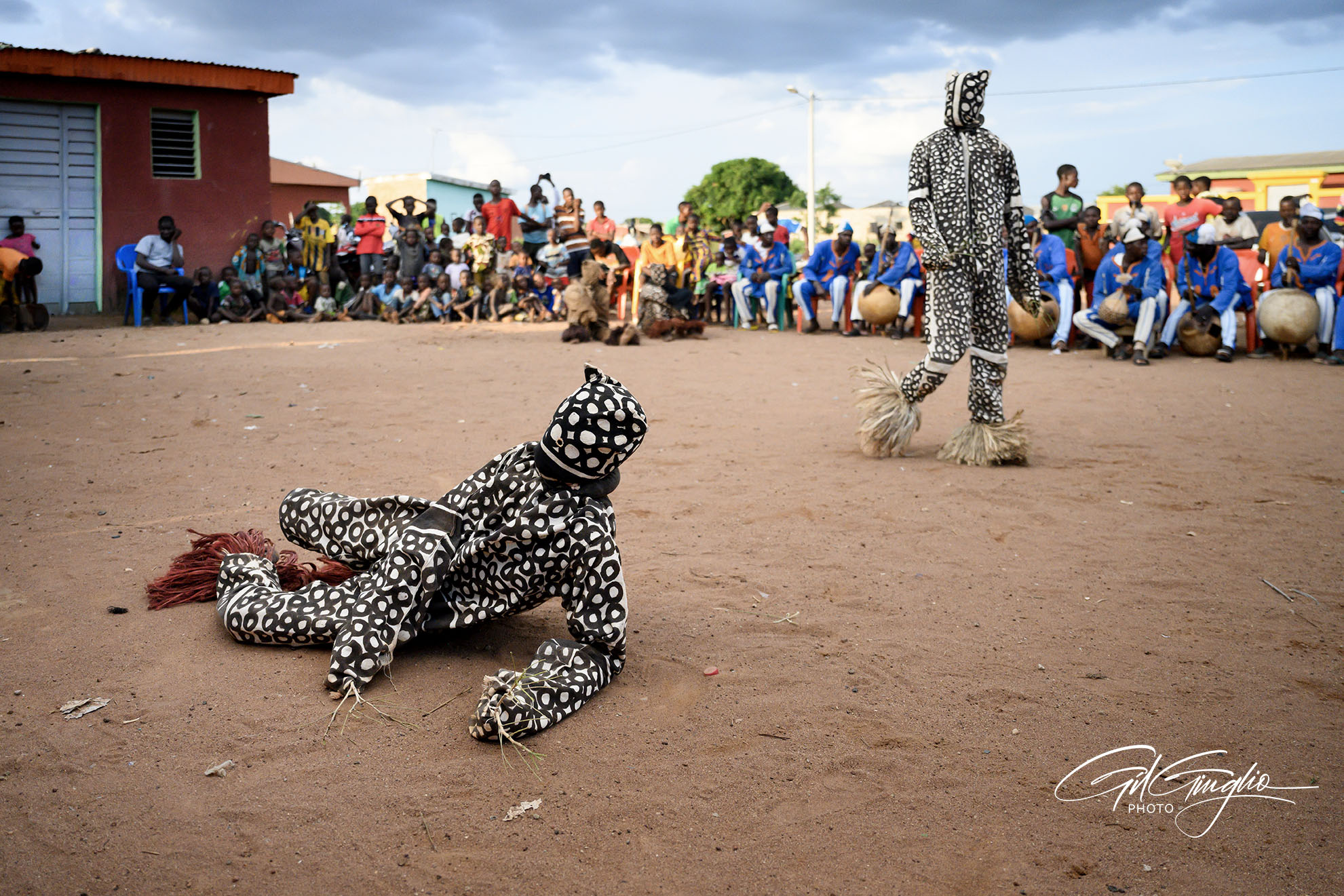
The most spectacular moment of the trip is undoubtedly the boloye, the dance of the panther men.
This traditional Senufo dance, also known as the panther man dance, features acrobatic movements and costumes reminiscent of a panther’s coat. It is notably associated with Senufo initiation traditions.
The young dancers, concealed beneath their spotted costumes, leap and twirl to the rhythm of the percussion.
Movement, costumes, rhythm, colors, and physical energy combine to create a scene of great intensity.
But behind the spectacular appearance lies a profound cultural and spiritual dimension.
The boloye cannot be reduced to mere folklore intended for visitors.
As with the Poro, certain practices and meanings belong to those who know and practice them.
Respect is therefore just as important as the image itself.
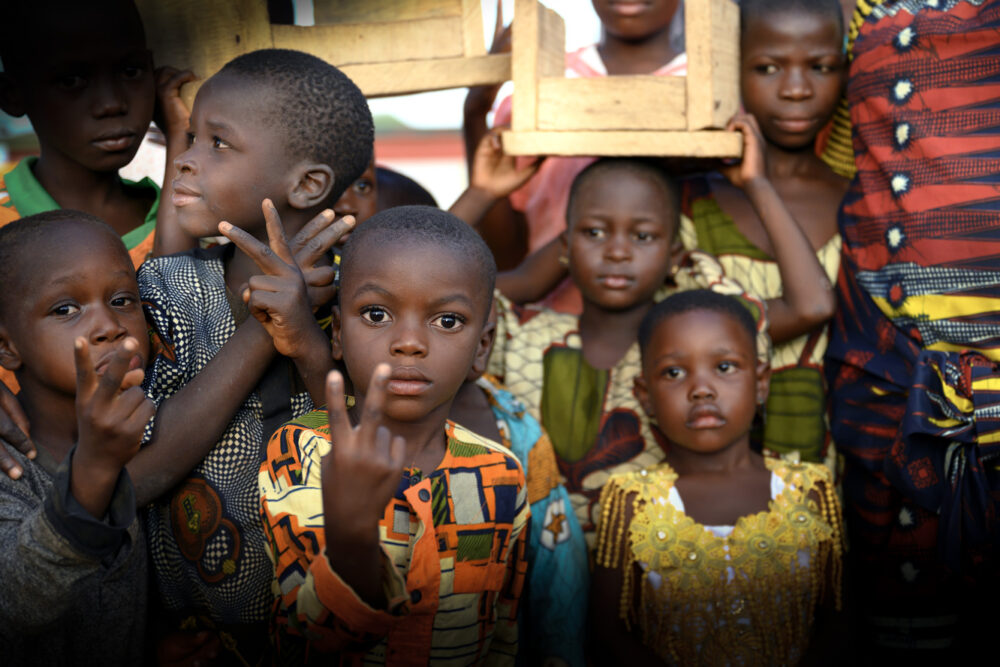
Against all expectations, we are invited to dance with them. Clumsily, of course. To the sound of the instruments and percussion, we try to follow the movements.
For a few minutes, the line between visitors and villagers disappears. Good-natured laughter bursts forth from the women and children.
This is probably one of the most beautiful ways to discover a culture: when it ceases to be merely observed and becomes a shared moment.

N’Zi River Lodge, a wild retreat in the heart of Côte d’Ivoire
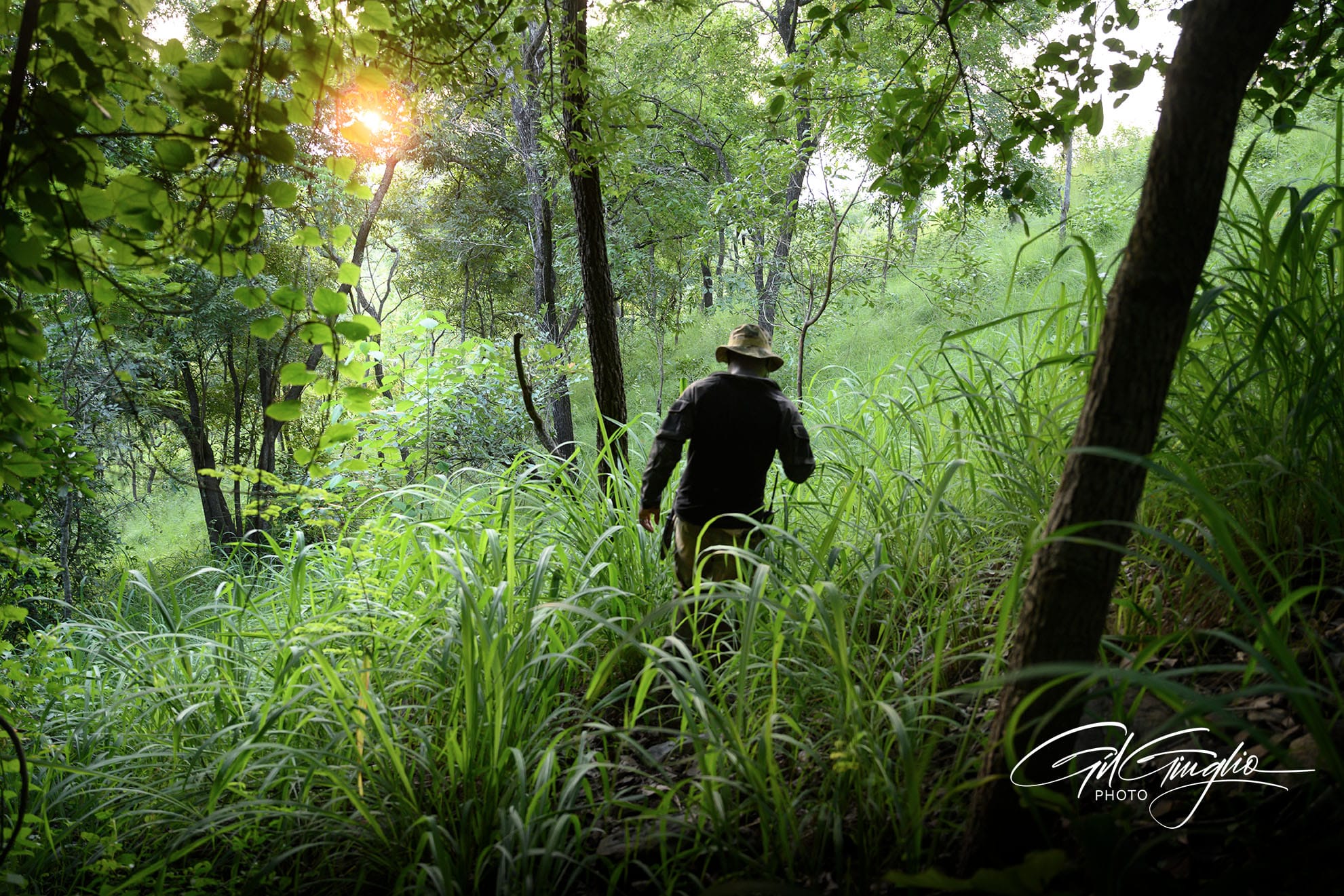
Heading back down toward the center of the country, the scenery changes completely at the N’Zi River Lodge, located about 45 kilometers northeast of Bouaké, in the Gbêkê region. The lodge is situated in the heart of a nature reserve spanning approximately 41,000 hectares.
After the red earth of the north and the Senufo villages, lush green vegetation takes center stage once again.
It takes a few kilometers on a dirt road to reach the lodge, which is intentionally situated far from the hustle and bustle of the outside world.
Here, you have to slow down!
The reflections on the water, the silhouettes of animals, the vegetation, and above all, the light at day’s end offer a different way of experiencing Côte d’Ivoire.
The country is no longer just about cities, markets, and villages. It also becomes a land of wide-open spaces and wildlife.
The N’Zi River Lodge offers safaris by car and on foot in an environment dedicated to biodiversity conservation.
And in the evening, over a meal featuring local flavors, the feeling is quite simple:
you’re just at peace.
Louis Frédéric Diakité’s team of rangers is attentive to every need and knows how to put guests at ease right away.
After traveling for kilometers, this peaceful respite is most welcome.
Yamoussoukro, the Capital of Excess
Last stop: Yamoussoukro, the political capital of Côte d’Ivoire and the birthplace of Félix Houphouët-Boigny, the first president of independent Côte d’Ivoire.
Yamoussoukro is an astonishing city.
Its avenues are immense. Its vistas sometimes seem out of proportion. Monumental buildings rise up in the midst of very open urban spaces.

This sense of excess is directly linked to Houphouët Boigny’s vision for his hometown.
Yamoussoukro was to become a modern and prestigious capital, capable of symbolizing the ambitions of a young, independent nation.
The city officially became the political and administrative capital of Côte d’Ivoire in 1983, even though Abidjan remains the country’s main economic center.
And rising in the heart of this city is one of the most astonishing monuments on the African continent.

The Basilica of Our Lady of Peace: sheer grandeur!
The Basilica of Our Lady of Peace is, of course, the highlight of the visit.
Built on the initiative of Félix Houphouët-Boigny and modeled after St. Peter’s Basilica in Rome, it was consecrated on September 10, 1990, by Pope John Paul II.
The building first impresses with its sheer size, then with its surroundings, and finally with the contrast between this monumental architecture and the city that surrounds it.
Inside, the proportions are dizzying. Beneath the immense dome, visitors seem minuscule.
The space is spectacular: symmetry, perspectives, columns, stained-glass windows, light, and volumes offer an incredible array of possibilities.
But above all, you must look up to realize that you are in a building whose scale seems to have been designed to impress.
The Crocodiles of Yamoussoukro: Between Symbol and Legend
Near the presidential palace are the ponds that are home to the famous crocodiles of Yamoussoukro.
They have become one of the city’s most striking symbols and remain closely associated, in the collective imagination, with Félix Houphouët-Boigny.
The presidential palace, its long walls, and the wide avenues surrounding it further reinforce this impression of a capital city built on an unusual scale.
Yamoussoukro feels as much like a political project as it does a city. And that is precisely what makes it interesting.
Ivory Coast: A Journey Through Memories, Cultures, and Discoveries
This trip ultimately turned out to be two journeys in one.
That of a traveler discovering contemporary Côte d’Ivoire—its cities, landscapes, economy, artisans, traditions, and people.
And that of a child who, several decades later, rediscovers a part of his personal history.
I returned with images, of course, but some things cannot be captured in a photograph.
An expression that suddenly comes back to mind. A forgotten flavor. A scent. A color. A landscape you thought you’d forgotten. A song.
And sometimes a few notes by Alpha Blondy or Tiken Jah Fakoly that pop up as you turn a corner.
To give you an idea of just how unlikely these encounters can be, we even struck up a conversation with Tiken Jah Fakoly’s older brother—an elected official from a region in the north—in the departure lounge at Abidjan Airport, before boarding a domestic flight.
For a few seconds, the photographer I’ve become today simply becomes the child who lived in Cocody again. The one who walked to school through the neighborhoods.
The one who discovered his first tropical colors, his first flavors, his first African landscapes.
And perhaps that, in the end, is the most beautiful memory of this trip to Côte d’Ivoire.
I thought I was coming back to photograph a country. In the end, I came back to rediscover a part of myself.
Practical Information
Ivory Coast Tourist Office:
Sublime Côte d’Ivoire
4 Rue Paul Valéry, 16th arrondissement, Paris, France, 75016. Tel. 06 86 63 25 01
You can have your visa validated and purchase it upon arrival at Félix Houphouët-Boigny International Airport in Abidjan.
Air Côte d’Ivoire operates at least 7 flights per week between Paris CDG and Abidjan year-round.
The airline’s staff is very friendly, and the flights are very pleasant, even in economy class.
Tel. 01 87 89 48 83.
For accommodations in Korhogo: Hairai Appart-Hôtel. Spacious, fully equipped apartments. The lovely staff is always ready to help you. (Airport Road, 100 meters from Lonya College).
On-site phone: +2250702746493
Nzi River Lodge
Several tour operators offer the N’Z River Lodge, but you can contact the on-site manager directly, who will be happy to arrange your visit and stay at this eco-lodge in the center of the country.
On-site information. While there, tune in to the new local TV channel: 7Info
A great source of information for finding out what’s happening—including cultural events—all over the country.
🔵 Pour ne manquer aucune news sur InfoTravel, abonnez-vous sur Google Actualités. Et si vous nous adorez, on a une newsletter une fois par semaine.