

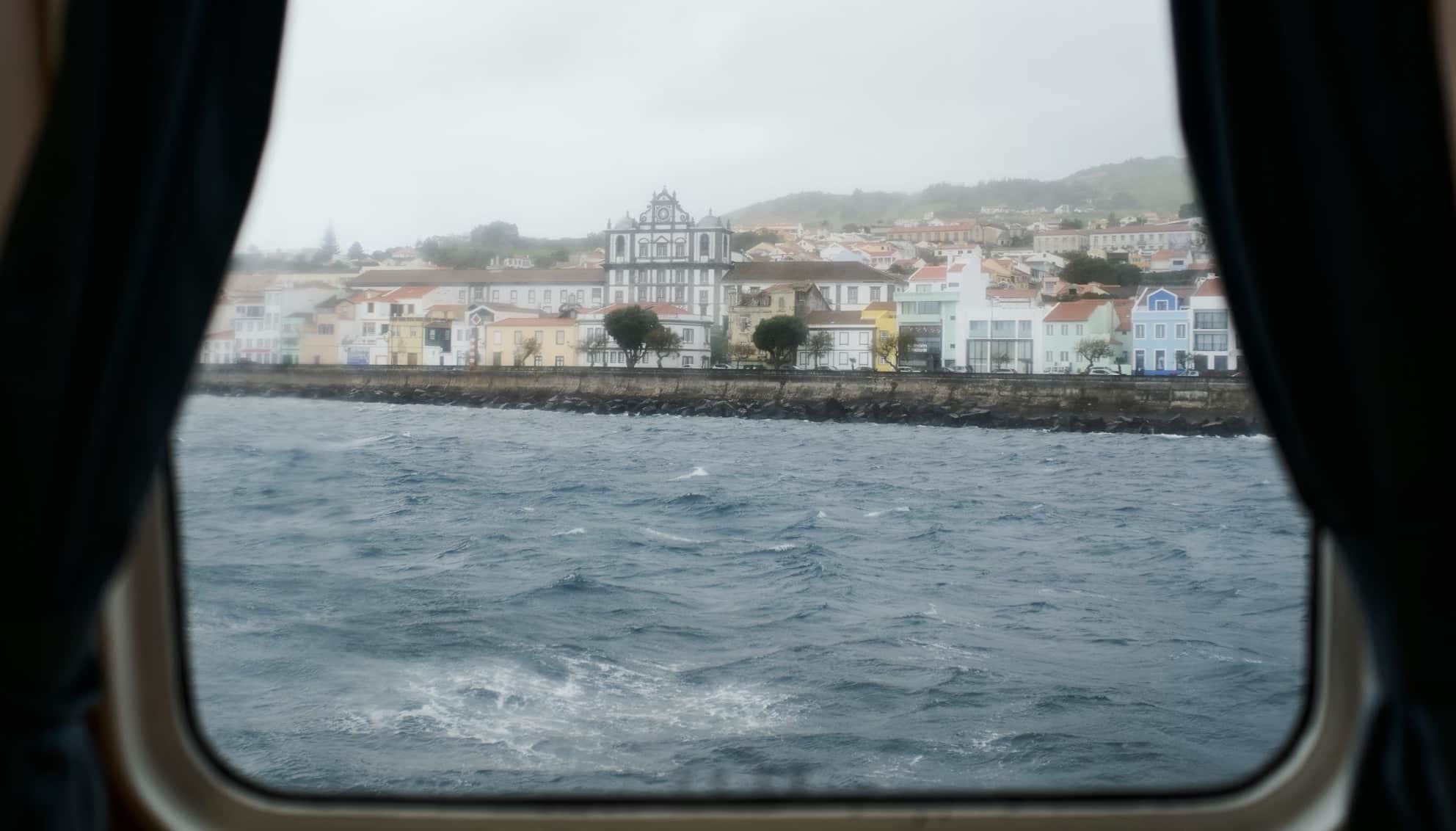
Portugal is one of the Western European countries where nature remains most accessible—from the cliffs of the Algarve to the forests of the Minho, and the volcanic plateaus of the Azores.
This article explores the country’s main natural regions, what they have to offer, and how to plan a trip that goes beyond the summer beaches for which Portugal is most often known.

The Green North – The Minho and the Peneda-Gerês National Park
Northern Portugal is the country’s wettest and most forested region, bathed by Atlantic rains that sustain forests of oak, beech, and eucalyptus on hills that the rest of Western Europe has largely deforested over the centuries. The Peneda-Gerês National Park, the only national park on mainland Portugal, spans 700 square kilometers of granite, waterfalls, and stone villages that have changed little since the Middle Ages. Iberian wolves are present in the park—the populations remain elusive, but the park runs a monitoring program, and observant hikers may spot tracks. The Minho River, which forms the border with Spanish Galicia, flows through a valley of terraced vineyards producing vinho verde, a light, slightly sparkling wine that’s best enjoyed on the spot rather than after being transported. The city of Braga, an hour from Porto, has a compact historic center with a 12th-century Romanesque cathedral and a covered market that still functions as a neighborhood market rather than a tourist attraction. The Porto–Lisbon train connects the country’s two major cities in less than three hours on the Alfa Pendular service, allowing you to use Porto as a northern base and gradually make your way south without having to rent a car from the start.
The Center—Serra da Estrela and the Pine Forests
The Serra da Estrela is the highest point in mainland Portugal, reaching 1,993 meters at Torre—a modest altitude compared to the Alps or the Pyrenees, but high enough to produce snow in winter and a high-mountain plateau that contrasts sharply with the coastline. The natural park surrounding the massif protects landscapes of granite eroded by glaciers, valleys carved by the Zêzere and Mondego rivers, and shepherds’ villages, some of which still produce queijo da Serra, a soft cheese made from sheep’s milk curdled with meadow cardamine rather than animal rennet. The forest in central Portugal was severely affected by the 2017 wildfires, which burned hundreds of thousands of hectares of pine and eucalyptus trees. Reforestation is underway, but the scars remain visible across vast areas, giving travelers a more nuanced picture of forest management in Portugal than a typical travel guide would convey. Coimbra, the university town on the banks of the Mondego River, is worth a night or two for its 18th-century Baroque library and its narrow streets that wind their way up to the university, founded in 1290.
The Alentejo—Plains of Cork and Open Skies
The Alentejo covers one-third of Portugal’s territory and is home to less than ten percent of its population. It is a region of rolling plains covered with cork oak forests, wheat fields, and olive groves that stretch to the horizon under a sky whose light constantly shifts from morning to evening. The cork oak is the region’s iconic tree—Portugal produces about half of the world’s cork, and the trees, which are stripped of their bark every nine years, bear painted numbers indicating the year of the last harvest. Évora, a UNESCO World Heritage Site, features a 1st-century Roman temple standing in the city centerthe city and a Chapel of Bones built in the 17th century by Franciscan monks using the bones of 5,000 people—two monuments that give the city a historical richness uncommon for a city of 55,000 inhabitants. The Castro Verde Biosphere Reserve in the Lower Alentejo is one of the last areas in Europe where the great bustard, one of the heaviest flight-capable birds of the plains, breeds in significant numbers. Nights in the Alentejo are among the darkest on the Portuguese mainland, and the region has developed a tourism industry centered on stargazing around the Alqueva Reservoir, the largest in Western Europe.
The Algarve—Beyond the Sandy Beaches
The Algarve is known for its beaches, and rightly so—the coastline between Sagres and Tavira features some of the most varied coastal rock formations in Southern Europe. But the Algarve’s interior—the Serra de Monchique and the eastern fringe near Spain—receives few visitors despite a landscape of wooded hills and white villages that is very different from the seaside. The Ria Formosa, a coastal nature reserve east of Faro, is a system of lagoons, barrier islands, and salt marshes that constitutes one of Europe’s most important wetlands for migratory birds—thousands of flamingos feed there in the winter. Cape St. Vincent, at the southwestern tip of Portugal —and of continental Europe—is a windswept promontory with cliffs plunging 75 meters into the Atlantic and a concentration of migrating birds of prey in the fall that attracts birdwatchers from all over Europe. Sagres, the village at the foot of the cape, features a 15th-century fortress and a thriving surfing scene that gives this tip of the country a vibe distinct from the rest of the tourist-heavy Algarve.
The Azores—Volcanoes, Whales, and Laurisilva Forests
The Azores are an archipelago of nine volcanic islands in the North Atlantic, about 1,500 kilometers west of mainland Portugal, and they constitute one of Europe’s most unique ecosystems. São Miguel, the largest island, features crater lakes whose waters are colored green and blue by the mineral composition of the volcanic soils, active hydrothermal springs in the village of Furnas, and a laurisilva forest—a subtropical rainforest dating back to the Tertiary period—that covers the upper slopes of the mountains. The waters surrounding the Azores are one of the best places in Europe for whale watching—sperm whales, common dolphins, and blue whales frequent the channels between the islands, and several operators on Faial and Pico offer guided whale-watching tours. Pico, the neighboring island, is home to Portugal’s highest peak—the Pico volcano at 2,351 meters—which can be hiked in a single day with a local guide. Winegrowing on Pico takes place within enclosures made of black volcanic stone called currais, an agricultural landscape designated as a World Heritage Site that produces a dry, mineral-rich white wine little known outside of Portugal.
Conclusion
Portugal’s natural beauty far exceeds what most travelers see on a first visit. From the Minho National Park to the volcanoes of the Azores, the country offers such a diversity of landscapes, wildlife, and geology that it warrants several separate trips rather than just one. Start with one region, take the time to venture off the beaten path, and save the rest for next time.
🔵 Pour ne manquer aucune news sur InfoTravel, abonnez-vous sur Google Actualités. Et si vous nous adorez, on a une newsletter une fois par semaine.